News


Photo: UHH, Lucas Schneider (left); UHH/CUI (right)
29 September 2026|CUI in FocusNew exotic particles for storing quantum information
Experimental and theoretical groups at CUI use cleverly lined-up atoms to create new exotic “quasiparticles”. To do this, they combine magnetism and superconductivity on the atomic scale. The resulting particles – known as Majorana particles – have the potential to revolutionize the storage and manipulation of quantum...
Photo: Jörg Harms, Eryin Wang (MPSD)
24 September 2026|Advanced Imaging HighlightsPicosecond pulses push superconductors beyond their critical-current limit
Superconductors can carry electrical current without resistance, but only up to a maximum value known as the critical current. The critical current is a crucial figure of merit for applications, and materials science has been long focused on increasing this limit. Researchers at the Max Planck Institute for the Structure...
Photo: Jeremias Kanz
22 September 2026|Advanced Imaging of MatterWübben foundation supports student in attosecond physics
Starting October 1, the Wübben Stiftung Wissenschaft will award Felix Maximilian Gentsch a Student Grant for a total of twelve months. The physics student at Ludwig-Maximilians-Universität München was nominated by cluster spokesperson Prof. Francesca Calegari. The grant will enable him to conduct research within the Cluster...
Photo: DESY
8 September 2026|Advanced Imaging of MatterNorth German Science Prize for cluster research
Every two years, the North German Science Prize is awarded for outstanding achievements in the context of exceptional cross-state research collaborations. This year, the focus is on the life sciences. Among the recipients is a project in which cluster spokesperson Prof. Henry Chapman has a leading role.
Photo: DESY, O. Yefanov, UHH/DESY, H. Chapman, ASU, P. Fromme (left); UHH/CUI (right)
20 August 2026|CUI in FocusExploring structure and function of materials using X-ray free-electron lasers
When a bunch of electrons travels at near the speed of light through a 100-meter long periodic array of magnets after being accelerated to giga-electron-volts in a linear particle accelerator and compressed into a pulse only femtoseconds in duration, it radiates the brightest flashes of X-rays ever made. In the magazine...
Photo: UHH/CUI
12 August 2026|Advanced Imaging of MatterWolfgang Parak honored as SPIE Fellow
Prof. Wolfgang Parak has been named a Fellow of the International Society for Optics and Photonics (SPIE). This honor recognizes outstanding contributions to optics and photonics through technical achievements, as well as strong commitment to the community and the field of research.


Videos
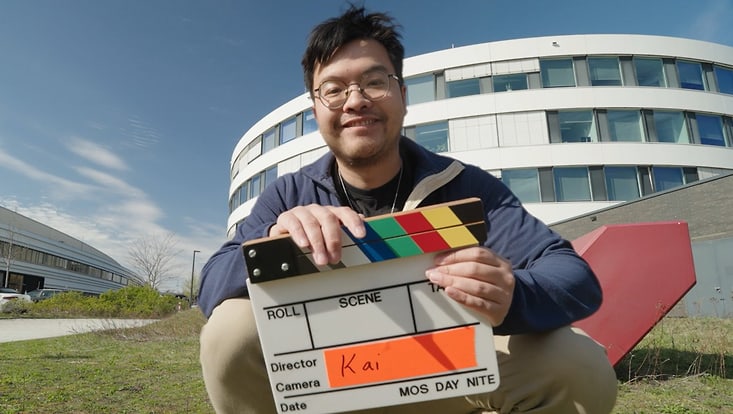
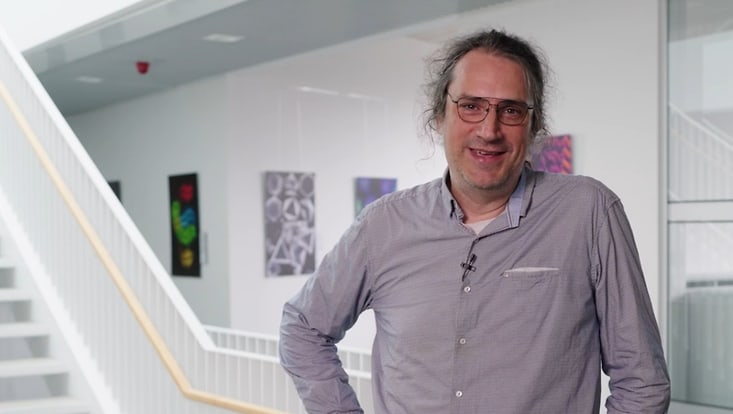
In the "Faces of Research" series, Sarodi Jonak Dutta and Kai-Fu Wong share what they find fascinating about their research and what makes the cluster so special. Also featured: Cluster spokesperson Prof. Francesca Calegari and Prof. Wolfgang Parak.