CUI: Advanced Imaging of Matter
Cluster of ExcellenceCUI: Advanced
Imaging of Matter
Imaging of Matter
Photo: UHH/CUI, Peter Garten
4 August 2026

Photo: European XFEL
The German Federal Ministry for Research, Technology and Space (BMFTR) announced funding for a hub for laser fusion, with sites in Hamburg/Schleswig-Holstein and Hesse. European XFEL will be at the heart of a fusion R&D campus Hamburg/Schleswig-Holstein. The campus will serve as the center of German laser fusion research and development, with the clear goal of preparing for the construction of the world's first commercial laser fusion power plant in Germany.
Laser fusion is one of several possible methods of achieving nuclear fusion, the process that powers the sun. Fusion is considered to be an energy generation method of the future, wherein enormous amounts of electricity could be generated with relatively little waste.
The German laser fusion companies Marvel Fusion and Focused Energy, co-founders and co-shareholders of the hub, are developing the campus together with European XFEL, DESY, HZDR, the University of Hamburg, Kiel University, and the University of Rostock, along with a broad network of additional scientific and industrial partners and with the support of the states of Hamburg and Schleswig-Holstein. The hub will encompass an additional site – the Fusion Industrialization Campus in Biblis, Hesse – and incorporate satellite locations across the full Fusion State Alliance (“Länderallianz”). The BMFTR is funding the hub under the “Hubs for Fusion” funding directive, which is part of the federal government’s Hightech Agenda.
For Moritz von der Linden, the CEO of Marvel Fusion, the initiative is an essential step on the way to industrially useful fusion energy. “Fusion energy will be the energy source of the 21st century – unlimited, safe, and capable of providing baseload power,” he says. “With today's funding decision by the BMFTR, the Laser Fusion Hub becomes the place where we accelerate research using existing infrastructure and translate it into market-ready technologies: industry-led, open to the entire ecosystem, and grounded in world-class science. This secures not only clean energy for tomorrow, but high-tech jobs, supply chains, and economic strength that will sustain Germany's prosperity for generations.”
Thomas Forner, CEO and Co-Founder, Focused Energy, says: “Affordable energy is the bottleneck of the 21st century. The availability of cheap, clean energy will determine where industry is built. For us, fusion is not a technology for short-term political cycles, but for the long-term security of clean, safe, and affordable energy. That is precisely why the hubs matter: they not only strengthen research and technology development, but also create the industrial foundation for a new energy infrastructure.”
Maryam Blumenthal, Senator for Science, Research and Gender Equality, Free and Hanseatic City of Hamburg: “The federal government's decision to fund the laser hubs sends a strong signal – for northern Germany and for Hamburg’s role in developing technologies that will shape our future. Fusion research could become a decisive factor in tomorrow's energy supply. With European XFEL and PETRA at DESY, Hamburg brings world-class research infrastructure to the table. The hands-on application experience that Focused Energy and Marvel Fusion contribute meets an exceptionally dynamic and innovation-driven environment in Science City. We have invested deliberately in recent years to create the best possible conditions here. I am delighted that together with Schleswig-Holstein and Hesse we are jointly supporting the hub, and I warmly congratulate everyone involved on this success.”
Dr. Dorit Stenke, Minister for Education, Science, Research and Culture of the State of Schleswig-Holstein: “Every major future technology begins with the decision to act. We are making that decision together today. With European XFEL, CAU, and close partnerships with DESY, the north brings not only a globally unique research infrastructure to the partnership, but also particular expertise in innovative nanomaterial design, X-ray diagnostics, plasma simulation, and laser technology. This is not only a gain for science – it is a clear signal: Schleswig-Holstein is shaping the energy of the future as an innovation hub."
Thomas Feurer, Head of European XFEL says: “The European XFEL is one of the most powerful X-ray lasers in the world – our high-precision diagnostics for compression physics are unique globally. They are the key to experimentally validating concepts for laser fusion and making the right decisions as the technology develops.”
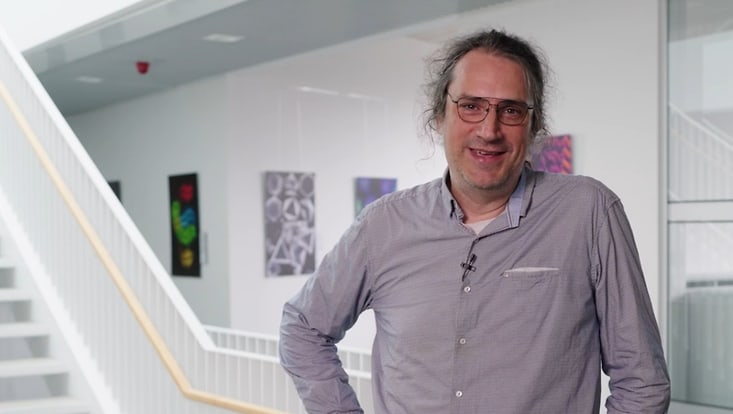
Research groups from DESY and the University of Hamburg already bring important early work to the cooperation, says Franz Kärtner, lead scientist at DESY, a professor for physics at the University and a researcher at the Cluster of Excellence "CUI: Advanced Imaging of Matter". “DESY and UHH have developed an efficient high energy and high power cryogenic laser technology scalable to the stringent needs of future Laser Fusion power plants operable with various ignition schemes,” Kärtner says. “The Laser Fusion Hub is essential to perform this demanding scaling to unprecedented average power levels and high efficiency in close collaboration with industry.”
Initially, the hub will focus mainly on laser research but remains open to all actors within the ecosystem. DESY and the University of Hamburg are already poised to contribute their expertise in materials science—for example, in the search for optimal construction materials for reactor components capable of withstanding the extreme conditions of hot plasma. Text: XFEL, DESY, ed.