CUI: Advanced Imaging of Matter
Cluster of ExcellenceCUI: Advanced
Imaging of Matter
Imaging of Matter
Photo: UHH/Denstorf
5 June 2026
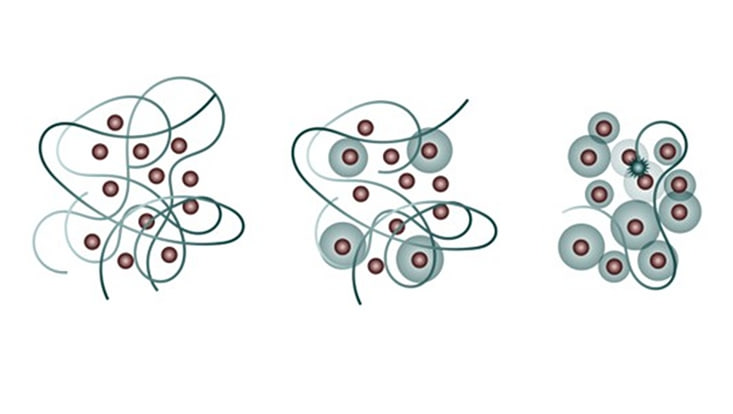
Photo: UHH/Großmann
Understanding strongly interacting matter far from equilibrium requires both precisely defined initial conditions and a consistent description of how the system evolves. Researchers at the University of Hamburg have now shown that the transition from a dense Rydberg gas to an ultracold plasma can be systematically explored by tuning the initial energy of the electrons created during ultrafast excitation. The study, published in 'Communications Physics', provides a consistent microscopic picture of this transition.
Ultracold atomic gases offer scientists an exceptional platform for studying matter under highly controlled conditions. In their experiments, Prof. Klaus Sengstock, Prof. Markus Drescher, and their team investigate a cloud of atoms that are either ionized or excited into so-called Rydberg states by an ultrashort laser pulse. In these states, one electron is driven far from the nucleus, creating an atom that is unusually large and highly sensitive to its environment. When many such atoms are produced in close proximity, they interact strongly and can no longer be treated as independent particles.
In the present study, the researchers examined how a dense cloud of ultracold rubidium atoms responded to excitation by a single femtosecond laser pulse. They focused on how this ultrafast perturbation initiates the transition from a gas of excited Rydberg atoms to a partially ionized, plasma-like state.
A key parameter in this process is the initial energy of the excited electrons. This determines the system’s starting conditions and influences whether the resulting state is dominated by free ions and electrons, as in an ultracold plasma, or whether Rydberg atoms continue to play an important role in the dynamics. By tuning this initial electron energy, the researchers were able to trace how the balance between free electrons, ions, and Rydberg atoms evolves.
Their results show that the excitation pulse immediately triggers many-body dynamics, initiating processes whereby Rydberg atoms are ionized or, conversely, an ion and a free electron recombine to form a Rydberg atom. “We found that the early dynamics after excitation already decides on the final balance of ions, electrons, and Rydberg atoms,” says the paper’s first author, Dr. Mario Großmann.
The experimental findings are supported by advanced numerical simulations which account for the interactions between ions, electrons, and Rydberg atoms. These simulations show quantitative agreement with the measurements. Together, the experiments and simulations demonstrate that the same microscopic framework can describe the emergence of ultracold plasmas from dense Rydberg gases across different excitation regimes. “This agreement provides a consistent microscopic picture of how ultracold plasmas emerge from dense Rydberg gases,” says Dr. Philipp Wessels-Staarmann.
The results deepen our understanding of strongly interacting many-body systems far from equilibrium, a topic that is important in many fields, ranging from condensed matter physics to astrophysics. Looking ahead, improved control over the excitation process and more predictive theoretical models will be essential for future applications, particularly when it comes to tailoring interaction-driven dynamics in dense quantum systems.
Mario Großmann, Jette Heyer, Julian Fiedler, Markus Drescher, Klaus Sengstock, Philipp Wessels-Staarmann & Juliette Simonet
Commun. Phys. 9, 170 (2026)